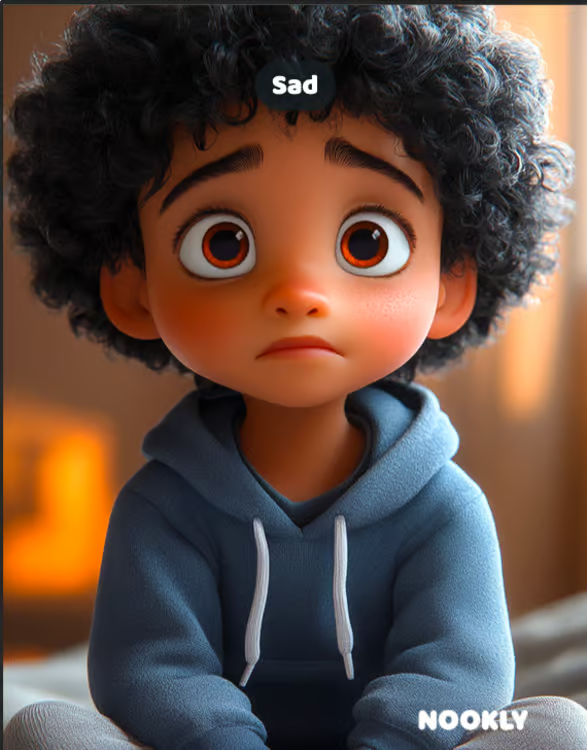
Coping with Frustration
Empower your neurodiverse learners, early childhood students, and children with special needs to navigate big emotions with our 'Coping with Frustration' resource. This beautifully designed visual story helps children understand what frustration feels like in their bodies and minds, offering a gentle introduction to recognizing early warning signs. Through engaging narrative and supportive illustrations, this resource provides practical and accessible calming strategies, giving children concrete tools to respond to frustration in positive and safe ways. Educators and parents will find this a valuable asset for building emotional literacy and self-regulation skills, fostering a sense of calm and control in moments of overwhelm. It’s perfect for reinforcing social-emotional learning and providing a framework for discussing difficult feelings in a constructive manner.
How to use this resource
Utilize this resource as a conversation starter about feelings. Read it aloud, pausing to ask questions like, 'Have you ever felt like this?' or 'What do you think [character's name] should do?' Encourage children to mimic the calming strategies presented, such as deep breaths or counting. For non-verbal learners, use visuals to prompt discussions about the emotion. Integrate this story into daily routines, referencing the strategies when real-life frustrations arise. Laminate pages for repeated use or create a 'calm-down corner' with the suggested techniques. Remember to model these coping skills yourself to demonstrate their effectiveness.
Learning Objectives
- ✓Recognize the physical and emotional signs of frustration.
- ✓Identify healthy and safe coping strategies for managing frustration.
- ✓Practice calming techniques such as deep breathing or self-talk.
- ✓Articulate feelings of frustration using appropriate vocabulary.
- ✓Develop self-regulation skills to respond constructively to challenging situations.