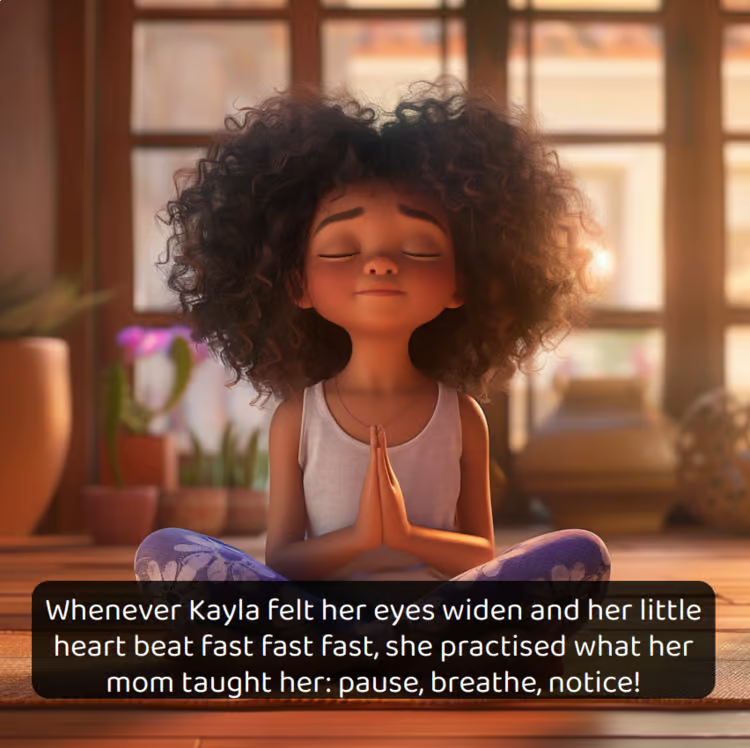
Personal Space
Empower your child or students to navigate social interactions with confidence and respect using Nookly's 'Personal Space' resource. This gentle and engaging story is specifically designed for neurodiverse children, early childhood learners, and children with special needs, making abstract social concepts concrete and understandable. Our visual learning approach helps children recognize the unspoken rules of personal space, understand why it's important, and learn to read subtle social cues. By exploring scenarios where personal space is respected and disrespected, children develop empathy and gain practical strategies for comfortable interactions. This resource is invaluable for fostering positive peer relationships, reducing social anxieties, and building essential social-emotional intelligence. Perfect for use at home, in the classroom, or during therapy sessions, it's a foundational tool for promoting respectful and harmonious environments for all learners. Equip your learners with the skills they need to feel safe, understood, and connected.
How to use this resource
Utilize this Nookly resource by reading the story aloud with your learner, pausing frequently to discuss the visual cues and characters' feelings. Encourage learners to point out examples of personal space being respected or disrespected in the illustrations. Role-play different scenarios presented in the story, allowing children to practice 'just right' body boundaries. Use it as a conversation starter before social events or group activities. For non-verbal learners, use gestures or PECS to prompt understanding. Reinforce concepts by observing and commenting on personal space during everyday interactions, praising appropriate behavior. This resource is perfect for individual, small group, or whole-class instruction.
Learning Objectives
- ✓Recognize and respect personal boundaries in various social situations.
- ✓Identify verbal and non-verbal cues related to personal space.
- ✓Formulate strategies for maintaining appropriate personal space.
- ✓Develop empathy for others' comfort levels regarding proximity.
- ✓Practice asking for and giving permission for physical touch or closeness.